Timothy D. Spivey

PhD Candidate, Business Administration (Business Analytics) · University of South Alabama · Mitchell College of Business
Dissertation defense: January 2027

I study how the public data behind regulatory research is built, and how fixing it changes what we conclude about disclosure rules and the markets they govern.

On the 2026–27 academic job market

Timothy D. Spivey
Timothy D. Spivey
PhD Candidate — Business Analytics
University of South Alabama
Adjunct Instructor · Pensacola State College
3dissertation essays
5sole-authored papers

Researcher, Analyst & Educator

Timothy D. Spivey is a doctoral candidate in Business Administration, with a concentration in Business Analytics, at the University of South Alabama, where his dissertation examines what mandatory breach disclosure timing actually does — to markets, to organizations, and to boards.

The question is not whether disclosure matters. It is whether mandating when a firm discloses produces the benefit regulators assumed it would, and whether the public data used to answer that question can support the answer. The empirical design compares breaches at carriers subject to the FCC's 2007 breach rule (47 CFR § 64.2011) with breaches at other public firms, using 1,054 public breach records from 2006 to 2025 that resolve to 489 distinct breach events.

His broader work follows two lines. One examines security culture: how fear-based policies, rigid IT controls and workplace surveillance can create the very risks they are meant to prevent. The other extends into telecom markets: how competition from fiber and fixed wireless shapes cable incumbents’ service and networks, and how operators should decide which customers to retain.

Outside the dissertation, he supervises management information systems at Mediacom Communications and teaches Introduction to Entrepreneurship and Entrepreneurship Marketing and Sales as an adjunct at Pensacola State College. Nearly twenty years of telecom operations lies beneath the research: he has built the reporting pipelines, sat in the escalation calls, and watched compliance decisions get made under real pressure. That is why the empirical questions he chases are the ones practitioners recognize.

He holds an MBA in Business Analytics from the University of West Florida and a BAS in Organizational Administration from Pensacola State College — where he now teaches.

Mandatory DisclosureCybersecurity GovernanceEvent StudiesCapital MarketsIT EthicsBusiness AnalyticsTelecom MarketsCustomer Analytics

Education

  • PhD, Business Administration (Business Analytics)
    University of South Alabama, Mitchell College of Business · Expected May 2027
  • MBA, Business Analytics
    University of West Florida
  • BAS, Business and Management (Organizational Administration)
    Pensacola State College

Records, Codes, and Filings: Measurement, Regulatory Status, and the Consequences of Data Breaches

Chair: Dr. Ying Johnson Dissertation defense: January 2027

Essay 2

Codes Are Not Coverage: Industry Classification, Regulatory Status, and Return Volatility After Data Breaches

Research on regulated firms often identifies them by industry code, but an industry code says what a firm does, not which rules it must follow. This essay shows that no industry-code convention reproduces the firms registered with the FCC as telecommunications carriers; the convention drawn from published practice finds only half of the regulated parent firms. Using the Form 499 registry and event-level breach data, it tests whether being subject to the FCC's breach rule changes return volatility after a breach is disclosed, and shows how a volatility pattern that industry codes produce shrinks under registry-verified treatment.

Essay 3

Answering to the FCC: Regulatory Status and Executive Departures After Data Breaches

A regulator is a stakeholder with power and legitimacy, and a breach makes that relationship urgent. This essay asks whether boards at FCC-regulated carriers are more or less likely than boards at other public firms to see an executive officer depart after a breach. It distinguishes executive departures from mere Item 5.02 filings using a classifier validated against blind reference codes, and measures departures within 30, 90, and 180 days of public notification.

Research

Three lines of empirical work: mandatory disclosure and markets, competition and regulation in broadband, and security culture and IT governance.

Mandatory disclosure and markets

  • Records Are Not Events: Disclosure Timing, Regulatory Status, and Market Reactions to Data Breaches
    Sole author · 2026

    Public breach databases record notifications, not incidents: one breach can appear many times, filing dates can stand in for breach dates, and industry codes stand in for regulatory status. This essay rebuilds the data at the event level, takes regulatory status from the FCC's Form 499 registry, and compares breaches at carriers subject to the FCC's 2007 breach rule with breaches at other public firms to show how those measurement choices shape estimated market reactions to breaches.

    Job market paper Dissertation essay Working paper
  • Codes Are Not Coverage: Industry Classification, Regulatory Status, and Return Volatility After Data Breaches
    Sole author · 2026

    Research on regulated firms often identifies them by industry code, but an industry code says what a firm does, not which rules it must follow. This essay shows that no industry-code convention reproduces the firms registered with the FCC as telecommunications carriers; the convention drawn from published practice finds only half of the regulated parent firms. Using the Form 499 registry and event-level breach data, it tests whether being subject to the FCC's breach rule changes return volatility after a breach is disclosed, and shows how a volatility pattern that industry codes produce shrinks under registry-verified treatment.

    Dissertation essay Working paper
  • Answering to the FCC: Regulatory Status and Executive Departures After Data Breaches
    Sole author · 2026

    A regulator is a stakeholder with power and legitimacy, and a breach makes that relationship urgent. This essay asks whether boards at FCC-regulated carriers are more or less likely than boards at other public firms to see an executive officer depart after a breach. It distinguishes executive departures from mere Item 5.02 filings using a classifier validated against blind reference codes, and measures departures within 30, 90, and 180 days of public notification.

    Dissertation essay Working paper

Competition and regulation in broadband

  • Competition Without Discipline? Fiber Entry, Complaints, and Cable Incumbents' Network Offers
    Sole author · 2026
    Working paper

Security culture and IT governance

  • The Insider Threat Paradox: How Security Policies Inadvertently Create the Threats They're Designed to Prevent
    Sole author · 2026

    Third paper in a series on security culture: how device-ownership claims and workplace surveillance turn loyal employees into insider threats, and a rights-based alternative.

    Working paper
  • Navigating the Shadows — A Comprehensive Framework for Anticipating, Identifying, and Managing Shadow IT in Organizations
    Spivey, T. D. & McIlveene, T. · 2024
    ISACA Journal, 6
    Practitioner publication Published
  • To Fear or Not to Fear: How to Create an Optimal Security Culture
    Batchelor, J. H., Spivey, T. D., & McIlveene, T. · 2023
    ISACA Journal, 6, 34–37
    Practitioner publication Published

Teaching

Courses taught at Pensacola State College and the University of West Florida, the business courses I am credentialed to teach, and the information systems and analytics courses my research prepares me for.

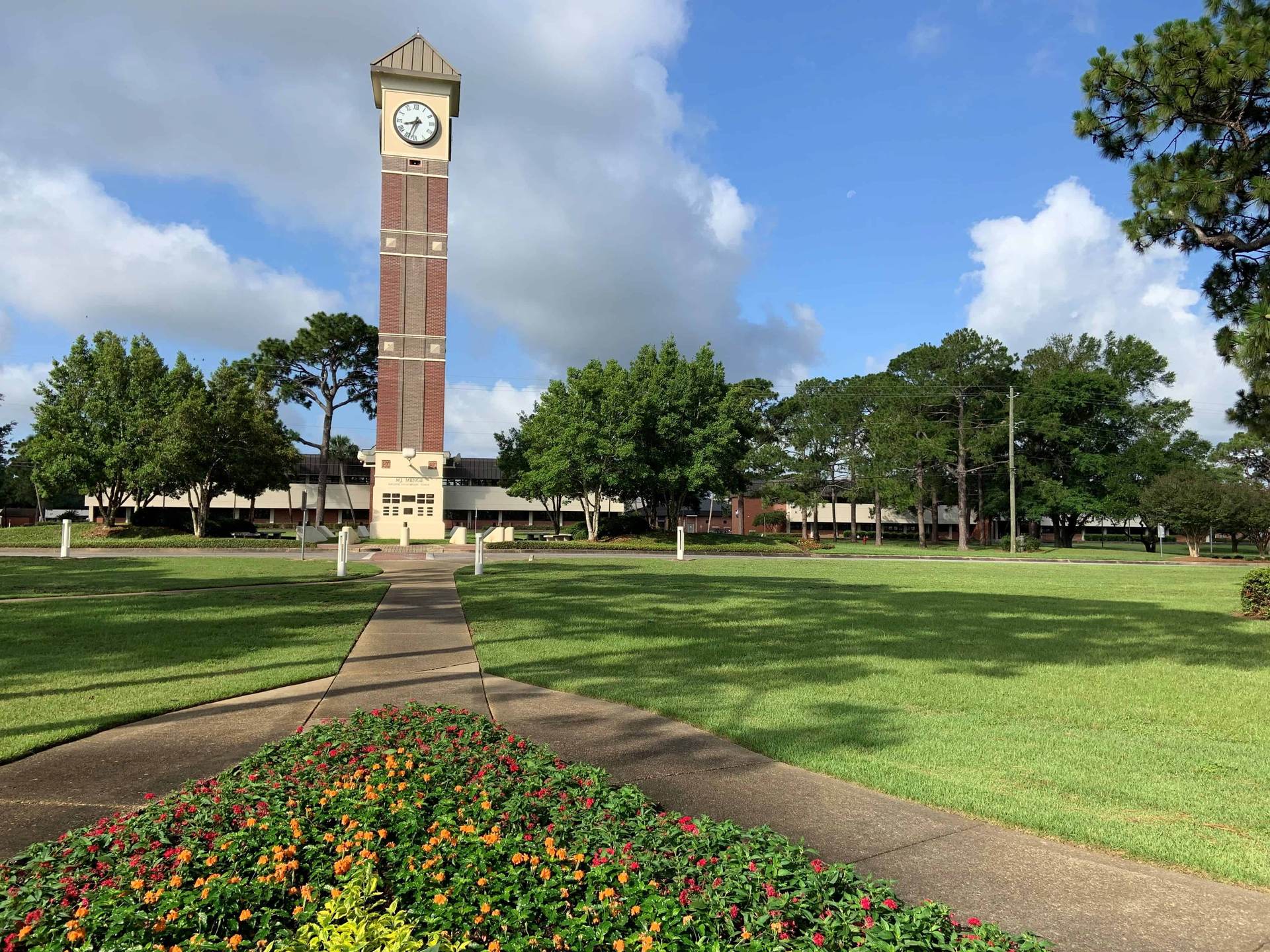
M. J. Menge clock tower, Pensacola State College

Courses taught

Pensacola State College
Adjunct Instructor
2025–present
Introduction to EntrepreneurshipEntrepreneurship Marketing and Sales (Spring 2027)
University of West Florida
Graduate Teaching Assistant
2022–2024
Writing for Business: Theory and Practice

Qualified to teach

Credentialed through the MBA (Business Administration):

  • Management, including organizational behavior, human resource management, operations and strategy
  • Entrepreneurship and small business management
  • Marketing principles and professional selling
  • Introduction to business and business communication

Teaching interests

Information systems and analytics courses, with the PhD in Business Analytics (expected 2027):

  • Business Analytics / Data Analytics
    MBA in Business Analytics; dissertation data pipeline
  • Database Management / SQL for Business
    Research and production data pipelines
  • Python for Business Analytics
    Python research pipelines for breach and broadband data
  • IT Governance, Risk and Cybersecurity Management
    Dissertation research; ISACA Journal publications
  • Business Statistics / Forecasting
    Six years leading statistical workforce forecasting

Applied research

Analytics built to answer operating questions, using public data and reproducible code.

Who Leaves, Who to Save, and What It Costs

A public-data retention playbook for broadband. It follows churn analysis through to the targeting decision: calibrated models, profit-based contact rules, uplift on a randomized experiment, and a fairness audit, with findings checked against operators' public disclosures.

Open the playbook

Breach Disclosure Research Pipeline

1,054 public breach records spanning nineteen years, resolved to 489 distinct events and matched to market data in a Python and Snowflake pipeline. The empirical backbone of my dissertation.

Operational Reporting and Forecasting

Nearly twenty years building reporting pipelines, executive scorecards and workforce forecasts in telecom operations.

Service & Affiliations

Editorial & Review Service

Peer Reviewer · Journal of Risk and Financial Management (MDPI)
Peer Reviewer · Business Strategy & Development (Wiley)

Professional Affiliations

ISACA

Download Full Curriculum Vitae

Academic history, complete publication list, applied work, and service record.

Get in Touch

Research collaboration, speaking, teaching, or consulting — reach out.

Contact Information

Research & academic
ts2427@jagmail.southalabama.edu
Teaching
tspivey@pensacolastate.edu
Industry or consulting
timothy@thresholddatasciences.com
Location
Pensacola State College
Pensacola, Florida

Send a Message